Posts tagged ‘bison’

Early Spring Wildlife of Teddy Roosevelt National Park

IMG_6173 (1)

On the way home from Yellowstone, Ryan and I usually camp for a night at North Dakota’s Teddy Roosevelt National Park. It breaks up the 16 hour drive home and allows us to get in some more shooting, and with a chance at several species which are not found at Yellowstone, specifically Black-tailed Prairie Dogs and Wild Horses (feral horses, more accurately). The campground at Cottonwood is usually fairly deserted in early spring and late fall, and we only had to compete with a big bull Bison who was vigorously scratching his belly on a big rock in the campsite that we wanted. He eventually moved on and we could set up our tents.
We drive the 36-mile loop once in the late afternoon, and then again in the morning before we have to hit I-94 East for home…and the loop rarely disappoints. [April 19-20, 2016]

Bison Teddy Roosevelt National Park Medora ND IMG_6336 (1) Bison Eclipse of the Sun
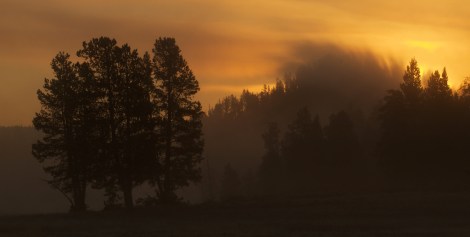
Last October we had some fantastic dawn shooting when a herd of Bison were silhouetted by the orange foggy sunrise. We hoped for the same conditions on this trip, but the fog was more of a mist that hung in the valleys; you could actually see the water droplets floating in air. This led to a crazy “fogbow”, the first I’d ever seen.
I positioned myself low in the valley in order to get the Bison between me and the rising sun…and this is the result…perfect rim light. I only wish there had been a bit more color in the morning sky. (“warmed” the shot by upping the white balance to 7500k)
[Canon 7D with Canon 100-400mm f4.5-5.6 IS II USM lens at 158mm; f22 at 1/2000 second; ISO 200; tripod]

Fogbow Teddy Roosevelt National Park Medora ND IMG_2904“Fogbow” over the prairie
I’d never witnessed a “fogbow” before. The morning fog was dense and you could actually see the suspended water droplets when backlit by the sun. My iPhone photo (above) actually turned out better than photos with my DSLR camera, probably due to the HDR feature on the iPhone.

Bison Teddy Roosevelt National Park Medora ND IMG_6248 (1)

Steaming Bison

[Canon 7D with Canon 100-400mm f4.5-5.6 IS II USM lens at 300mm; f7.1 at 1/3200 second; ISO 640; tripod]

Mule Deer Teddy Roosevelt National Park Medora ND IMG_6229 (1)Mule Deer Dawn
No antlers this time of year (barely nubbins with velvet on the males), but the huge ears of Mule Deer make a distinctive silhouette.
[Canon 7D with Canon 100-400mm f4.5-5.6 IS II USM lens at 135mm; f5.6 at 1/5000 second; ISO 640; tripod]

Sharp-tailed Grouse eating buds Teddy Roosevelt National Park Medora ND IMG_6429 (1)Sharp-tailed Grouse eating buds
We had four species of gallinaceous birds during our brief visit—Wild Turkey, Ring-necked Pheasant, Gray Partridge (rare and unexpected), and many of these normally elusive birds, the Sharp-tailed Grouse. This guy was feeding on flower buds of a Box Elder tree (correct me if I’m wrong). We spent about 10 minutes watching his acrobatic and agile moves among the outer branches as he tried to access the outermost buds. Teddy Roosevelt may be one of the best places to see this sought-after species outside of the lekking season (when they dance at dawn on known leks).
[Canon 7D with Canon 100-400mm f4.5-5.6 IS II USM lens at 400mm; f5.6 at 1/4000 second; ISO 250; handheld, braced on car]

Wild Horse Teddy Roosevelt National Park Medora ND IMG_6107 (1)Wild Horse (feral horse) with foal
We probably saw about 40 different Wild Horses (yes, I know, feral horses) in our two loops of the Wildlife Drive. They were just dropping their foals, and we saw one little black guy that was so new that he still wobbled a bit.
[Canon 7D with Canon 100-400mm f4.5-5.6 IS II USM lens at 300mm; f5 at 1/400 second; ISO 200; handheld]

Wild Horse Teddy Roosevelt National Park Medora ND IMG_6094 (1)Wild Horse (feral horse) with foal
Darn cute!
[Canon 7D with Canon 100-400mm f4.5-5.6 IS II USM lens at 300mm; f5 at 1/400 second; ISO 200; handheld]

Wild Horse Teddy Roosevelt National Park Medora ND IMG_6076 (1)Band of Wild Horses (feral horses)
The color variations of these horses never ceases to amaze me.
[Canon 7D with Canon 100-400mm f4.5-5.6 IS II USM lens at 100mm; f4.5 at 1/2000 second; ISO 200; handheld]

Black-tailed Prairie Dog Teddy Roosevelt National Park Medora ND IMG_6491 (1)Relaxin’ Prairie Dog (or sunbathing? or hiding?)
[Canon 7D with Canon 100-400mm f4.5-5.6 IS II USM lens at 400mm; f5.6 at 1/3200 second; ISO 250; handheld]

Black-tailed Prairie Dog Teddy Roosevelt National Park Medora ND IMG_6473 (1)

Family Time (Black-tailed Prairie Dogs)
[Canon 7D with Canon 100-400mm f4.5-5.6 IS II USM lens at 400mm; f5.6 at 1/1600 second; ISO 250; handheld]

Black-tailed Prairie Dog Teddy Roosevelt National Park Medora ND IMG_6140 (1)

Cuddly Companions (Black-tailed Prairie Dogs)
[Canon 7D with Canon 100-400mm f4.5-5.6 IS II USM lens at 400mm; f8 at 1/250 second; ISO 200; handheld]

Mountain Bluebird Teddy Roosevelt National Park Medora ND IMG_6449 (1)The Perfect Perch
…Just wish I had a better angle …and was a bit closer…and had better light. Oh well. Mountain Bluebird.
[Canon 7D with Canon 100-400mm f4.5-5.6 IS II USM lens at 400mm; f5.6 at 1/6400 second; ISO 250; handheld]

Best Wildlife Photos of 2015 (non-bird)

I’m finally getting around to posting my favorite non-bird wildlife photos of 2015. This is as much an exercise in editing (and learning) for me, as it is sharing photos with you all. It’s always great fun to review the year’s adventures and try to whittle down the images. I give a far higher priority to photos that are a bit creative vs. a standard portrait in front light. I also tend to favor images that show some kind of animal behavior, such as the cooperative hunting between the Badger and Coyote. Enjoy!
Ermine Weasel Peary Road Sax-Zim Bog MN IMG_7542 Ermine of the Bog

My parents and sister and family came up north to see the newly-completed Friends of Sax-Zim Bog Welcome Center where I am Executive Director. We had a nice visit on a cold February day and headed out on a tour of our lands. At the Friends’ Yellow-bellied Bog I saw something dash across the snow-covered road and I immediately recognized it as a winter-pelaged Short-tailed Weasel that we call Ermine. I quickly rolled the window down and started squeaking on my knuckle to attract its attention. This inquisitive guy made three lightning fast circles around our car, pausing only to look for the squeaking prey. He moved so fast that I only got a couple in focus, including this shot.
[Canon 7D with Canon 400mm f5.6 lens; f5.6 at 1/4,000 second; ISO 250; handheld]
[Ermine (Short-tailed Weasel); Sax-Zim Bog, northern Minnesota]

Badger and Coyote hunting Teddy Roosevelt National Park ND IMG_5687Huntin’ Buddies
I chose this image more for its rarity. Cooperative hunting between Badgers and Coyotes is a rarely seen behavior, limited to areas where their ranges overlap and where Coyotes are not persecuted by man, in this case, Teddy Roosevelt National Park in North Dakota. In this large Black-tailed Prairie Dog village, the Badger would go head first down a hole and try to dig the Prairie Dog out, the Coyote stood attentively nearby, hoping for the ‘dog’ to pop out another of its escape holes. Mammalogists have proven that the Coyote benefits from this partnership by catching more Prairie Dogs than if it was hunting solo. It is assumed that the Badger benefits too, as possibly the Coyote may chase an “escapee” back down its hole and into the jaws of the Badger.
[Coyote and Badger; Theodore Roosevelt National Park, North Dakota]

Bison backlit sunrise Teddy Roosevelt National Park ND IMG_5996 Backlit Bison

There is one easy thing that can really help your wildlife photography (that doesn’t involve expensive equipment!) and that is to GET IN THE FIELD EARLY! Dawn is the time when crepuscular critters may still be active and diurnal animals are also moving around. In summer, the mornings are cool and wildlife is more energized, much more so than during the heat of midday.

We found a heard of Bison backlit by the sun which was giving us gorgeous rim lighting on the coats of the Bison. Underexposing by several stops highlighted their breath on this chilly morning.
[Canon 7D with Canon 400mm f5.6 lens; f5.6 at 1/8000 second; ISO 100; -3 ev; hand-held]
[Bison; Theodore Roosevelt National Park, North Dakota]

Bison Teddy Roosevelt National Park ND IMG_7032Horn of the Beast
I LOVE Bison! Can’t get enough of them. Every time I see a herd (in Yellowstone, Minnesota’s Blue Mounds State Park, Custer State Park in South Dakota, or here, in North Dakota’s Teddy Roosevelt National Park) it reminds me how close we (selfish and wasteful) humans came to wiping their millions off the face of the Earth. Plus, they are just MASSIVE beasts…beasts that let you get quite close. I love the texture of their hair/fur and the shape of the horn.
[Bison; Theodore Roosevelt National Park, North Dakota]

Bobcat Lynx rufus Carlton Co MN Bobcat IMG_3390

Bobcat Lynx rufus Carlton Co MN IMG_3373

Bobcat Lynx rufus Carlton Co MN IMG_3429 Pretty Kitty

Rarely do you get a chance to see, let alone photograph, a Bobcat in the daytime. But at a friends cabin in Carlton County, Minnesota last winter, I had that chance. After about 45 minutes of sitting quietly, it was an unbelievable thrill when Gene whispered, “Here she comes.” (We’ll call her “she” as her size seems small and features delicate…Plus, what a pretty face!). She cautiously slipped between the hazel brush, slinking her way towards the road-killed deer that Gene had provided. Sensing her surroundings with acute hearing and smell and vision, she crept closer, occasionally stopping to sit and relax, making sure the coast was clear. In the nearly 3 hours we sat there, she came in about four times, but retreating after a few minutes. I included three images of this rarely seen predator.

[Shot under low light with heavy overcast skies at dawn; Canon 7D with Canon 400mm f5.6 lens; f5.6 at 1/250 second at ISO 1000. Firmly locked on tripod!]
[Bobcat; Blackhoof River Valley, Carlton County, Minnesota]

Coyote Teddy Roosevelt National Park ND IMG_7224 Sliver Hunt
I’ve been trying to do more “Animal-in-the-Landscape” images in the last few years…mainly using my Canon 70-200mm f4 lens. Ryan spotted this distant hunting Coyote and we could see that it was working its way to the sliver of light illuminating the ridge top. What I liked about this scene was the spotlight like light, and the Coyote stepped right into it.
[Coyote; Theodore Roosevelt National Park, North Dakota]

IMG_5509 Fat and Happy
I included this mediocre photo because it just makes me smile. This Black-tailed Prairie Dog appears well fed and ready to hibernate!

Like many mammals that become more sedentary in winter, the Black-tailed Prairie Dogs try to put on a little fat for winter. This guys really accomplished his goal! These burrowing rodents are a blast to watch…And their “alarm” behavior is awesome; they stand upright and suddenly throw their paws straight up in the air and give a sharp “Yaah” call.

[Canon 7D with Canon 400mm f5.6 lens; f8 at 1/1000 second; -1/3ev; ISO 200; handheld braced on car window]
[Black-tailed Prairie Dog; Teddy Roosevelt National Park, North Dakota]

IMG_5818
Pronghorn herd
Late in the day we headed overland and came upon yet another massive Prairie Dog town, but on the fringes was a cautious herd of Pronghorns. They were in deep shade but I kind of like the subtle colors that the lighting conditions brought out. Pronghorns are very hard to photograph on sunny days…The whites of their fur blow out.
[Canon 7D with Canon 400mm f5.6 lens; f5.6 at 1/160 second; -2/3ev; ISO 400; tripod]
[Pronghorns; Teddy Roosevelt National Park, North Dakota]

Antheraea polyphemus Polyphemus Moth Skogstjarna Carlton Co MN IMG_9367Polyphemus
One of our Giant Silkworm Moths, the Polyphemus lives up to its name with a wingspan as wide as your outstretched hand…up to six inches across! This one was attracted to my garage lights and I carefully moved it in the morning to a more attractive background.
[Canon 7D with Canon 70-200mm f4; f8 at 1/250; ISO 1000; flash at -2 2/3 ev]
[Polyphemus Moth (Antheraea polyphemus); Skogstjarna, Carlton County, Minnesota]

Mule Deer Roosevelt National Park ND IMG_7551

Frosty Muley
It really helps to know how your camera sees versus how your eye sees. This pre-sunrise shot looked quite blah to my eye, but I knew the camera sees dawn shade as quite blue. I really like how the warm brown of the Muley contrasts with the cool blue frosty plants.
[Mule Deer; Theodore Roosevelt National Park, North Dakota]

Pine Marten Echo Trail Ely MN IMG_7940 Grandpa Marten
I was able to keep up with this American Marten (Pine Marten) as it hunted a logged area north of Ely, Minnesota. He/she loped along quite slowly and, that, combined with the very gray muzzle, led me to surmise that this was one old weasel!
[American (Pine) Marten; Echo Trail; Superior National Forest, Minnesota]

Porcupine silhouette Stone Lake Road Sax-Zim Bog MN IMG_7560 Porkie in Purple
April in to early May is the best time to see Porcupines in the North Woods. The Porkies seem giddy to get at the newly-sprouted catkins of willow and aspen. They relish these spring edibles and will crawl out on the most bendy branches to get at them. Sloth-like, they’ll reach out with their paws to pull inaccessible branches closer.
[Canon 7D with Canon 400mm f5.6 lens; f8 at 1/250; ISO 800; tripod]
[Porcupine; Sax-Zim Bog, Minnesota]

Prairie Dog Roosevelt National Park ND IMG_6053 Late for Dinner
A fun shot of a prairie dog doing what prairie dogs do all day long…going in and out of their underground tunnels. I strongly underexposed this image to highlight the rim lighting of this prairie dog against the setting sun. I didn’t plan that I’d get an image of one going down its hole, but I just kept shooting and this was actually my favorite.
[Black-tailed Prairie Dog; Teddy Roosevelt National Park, North Dakota]

Backlit Bison Breath and Starry Skyscapes: Teddy Roosevelt Day 2

Day 2 in North Dakota’s Teddy Roosevelt National Park started early…REALLY EARLY! Ryan and I crawled out of our cozy cocoons at 2:27am. Time to try for some Milky Way landscapes! It is always good to plan night shoots with a buddy, because if you are like me, it takes a lot of gumption to go out late at night by yourself. Unfortunately, we hadn’t scouted too well the day before, so it took some driving to find a good spot with foreground interest in the dark.
Night Sky Hoodoos Teddy Roosevelt National Park ND IMG_5950Hoodoos (eroded pinnacle-like landforms) and the Milky Way
Normally you’d like to keep your star exposures to under 30 seconds…That way star motion is minimized. Over 30 seconds, you start to get “star trails,” short streaks of light showing the movement of the stars in the sky.
[Canon 7D with Sigma 10-20mm lens at 10mm; f4 at 54 seconds; ISO 1600; tripod; headlamp to light hoodoos]

Night Sky Hoodoos Teddy Roosevelt National Park ND IMG_5957Hoodoos and the Milky Way
We had to get up in the wee hours of the morning since the moon did not set until after midnight….and any moon can wash out the stars and make the Milky Way much harder to see. I lit the hoodoos with my headlamp. Experiment with how much light painting you need to do to get pleasing results.
[Canon 7D with Sigma 10-20mm lens at 10mm; f4 at 69 seconds; ISO 1600; tripod; headlamp to light hoodoos]

Bison backlit sunrise Teddy Roosevelt National Park ND IMG_5999Bison backlit by morning sun.
There is one easy thing that can really help your wildlife photography (that doesn’t involve expensive equipment!) and that is to GET IN THE FIELD EARLY! Dawn is the time when crepuscular critters may still be active and diurnal animals are also moving around. In summer, the mornings are cool and wildlife is more energized, much more so than during the heat of midday.

We found a heard of Bison backlit by the sun which was giving us gorgeous rim lighting on the coats of the Bison. Underexposing by several stops highlighted their breath on this chilly morning.
[Canon 7D with Canon 400mm f5.6 lens; f8 at 1/6400 second; ISO 100; 0 ev; hand held]

Bison backlit sunrise Teddy Roosevelt National Park ND IMG_5996Bison backlit by morning sun
[Canon 7D with Canon 400mm f5.6 lens; f5.6 at 1/8000 second; ISO 100; -3 ev; hand held]

Landscape Roosevelt National Park ND IMG_6127
October is a great time to visit Teddy Roosevelt; Empty campgrounds, mild weather (25-60 degrees during our stay), golden grasses and abundant wildlife.
[Canon 7D with Canon 50mm f1.8 STM lens; f10 at 1/250 second; ISO 250; -2/3 ev; hand held]

Ryan Marshik Teddy Roosevelt National Park ND IMG_6488Ryan Marshik shooting Bison at dusk
[Canon 7D with Canon 70-200mm f4 lens; f4 at 1/125 second; ISO 1250; tripod]

Wild Horses Teddy Roosevelt National Park ND IMG_6200Band of Wild Horses (feral horses) in the rugged Teddy Roosevelt landscape
The wild horses of Teddy Roosevelt belong to many well-defined bands which do not mix socially.
[Canon 7D with Canon 70-200mm f4 lens; f6.3 at 1/320 second; ISO 100; -2/3 ev; tripod]

Wild Horses Teddy Roosevelt National Park ND IMG_6172Wild Horse (feral horse)
Details are sometimes more interesting than the entire subject.
[Canon 7D with Canon 400mm f5.6 lens; f6.3 at 1/1250 second; ISO 400; tripod]

Prairie Sky Teddy Roosevelt National Park ND IMG_6390
The North Unit Scenic Drive is an out-and-back road that travels from the bottom of the eroded landscape and climbs up through the badlands to the prairie grasslands at the top of the plateau.
[Canon 7D with Sigma 10-20mm lens; f8 at 1/80 second; ISO 320; tripod]

Badlands landscape North Unit Teddy Roosevelt National Park ND IMG_6354North Unit of Teddy Roosevelt
[Canon 7D with Sigma 10-20mm lens; f9 at 1/400 second; ISO 320; -2/3 ev; hand held]

Cottonwoods Little Missouri River Roosevelt National Park ND IMG_6299Big Cottonwood forests thrive in the bottomlands of the Little Missouri River (North Unit)
[Canon 7D with Canon 70-200mm f4 lens zoomed to 78mm; f14 at 1/200 second; ISO 320; hand held]

Cottonwoods Little Missouri River Roosevelt National Park ND IMG_6297Big Cottonwood forests thrive in the bottomlands of the Little Missouri River (North Unit)
Mid day can be a slow time for wildlife photography, so search out scenics or macros where you can use this higher-angle sunlight to your advantage. I like how the tree trunks went black and the shaded hillside turned blue…not to mention the golden side lit grass.
[Canon 7D with Canon 70-200mm f4 lens zoomed to 126mm; f10 at 1/250 second; ISO 320; hand held]

Prairie Dog Roosevelt National Park ND IMG_6065
A pair of Prairie Dogs greeting each other with Bison “blobs” in background.
[Canon 7D with Canon 400mm f5.6 lens; f8 at 1/1600 second; ISO 320; -2 ev; tripod]

Prairie Dog Roosevelt National Park ND IMG_6053A Black-tailed Prairie Dog goes head first down its burrow at sunrise.
You have to have a good reason to shoot into the sun. It works best when the sun is low on the horizon. I had to under expose the image by nearly 3 stops to get the pleasing rim light on the fur of this chunky Prairie Dog.
[Canon 7D with Canon 400mm f5.6 lens; f8 at 1/4000 second; ISO 320; -2 2/3 ev; tripod]

NEXT TIME: Day 3 in our late October Teddy Roosevelt Adventure


Cactus in Minnesota?—Blue Mounds State Park: Part 2

Prickly Pear Cactus 3 1024x
CACTUS IN MINNESOTA?
Yes, actually two species of Prickly Pear Cactus occur in southwest Minnesota…Opuntia fragilis and Opuntia macrorhiza. And Blue Mounds State Park is a great place to see them for yourself. No, not giant cartoon-type cactus but a low-growing cactus with GORGEOUS and HUGE yellow blossoms. They should be blooming now! To make sure, call the park office in advance.
Purple Prairie Clover? 234_3452 copyIf you squint, you can almost imagine a time when tallgrass prairie covered the endless landscapes of southern and western Minnesota. And Purple Prairie-Clover (Dalea purpurea) was part of that rich mosaic of prairie wildflowers.
This species is a legume with a taproot that may reach down 6 feet into the soil! This root system helps prevent soil erosion. It is a true prairie plant that has evolved with fire, and does not tolerate shade. Pronghorns are even known to eat it.

Bison foursome Blue Mounds 153_5345 copyA looming thunderstorm provides a dramatic backdrop to these grazing Bison. Don’t let me mislead you…There is a fence around the entire herd, and they are not always visible to park visitors.

Bison run blur Blue Mounds State Park Luverne MN _MG_5157 copyIn 1961, the park added three bison from the Fort Niobrara Wildlife Refuge near Valentine, Nebraska to start the present bison herd. Today, the Blue Mounds’ herd is maintained at more than 100 bison.

Coneflower Blue Mounds Rock Co MNNotice the deeply cut leaves and extemely reflexed ray petals of the Pinnate Prairie Coneflower (Ratibida pinnata) (sometimes called Gray-headed Coneflower). To emphasize the incredible five-foot height of this prairie native, I crouched down with my wide angle lens and put the flowering heads “in the clouds” so to speak. This photo would not have had much impact if taken at “eye-level” with the flowers.

Gray Partridge near Blue Mounds State Park Rock Co MNGray Partridge, the bird formerly known as Hungarian Partridge, are not easy to find…anywhere. So I was very fortunate to run into this breeding-plumaged male near the park. They are one of the few birds that utilize seemingly barren crop fields that surround the park. I lost the original of this image when I dropped a hard drive years ago, but fortunately I printed a 4×6. This is a scan of that 4×6 print.

Turkey Vulture Blue Mounds State Park landscape Rock Co MN IMG_9978A Turkey Vulture soars over the prairie at Blue Mounds State Park. This is the same tree and Sioux Quartzite outcrop as in another photo in this post.

Great Horned Owl cliff, Blue Mounds S.P. MN _MG_5237Cliffs can be habitat too. This Great Horned Owl has made a home of the Quartzite cliffs on the east side of the park. Hiking trails parallel the cliffs along the base and also on top of the bluff.

GHOW-SS in flight, Blue Mounds S.P. MN _MG_5240We rarely see Great Horned Owls in flight during the day. So when this guy took off, I held down the shutter. He/she then obligingly banked to reveal the full spread of its large wings and a full tail fan. The fact that he/she peeked over his/her shoulder at me was a bonus.

Rock Wren BlueMoundsSP-Stensaas (1)RARE FIND
I found this singing Rock Wren at the top of a cliff several Junes ago. The closest this western bird regularly breeds to Minnesota would be the Black Hills of South Dakota, over 300 miles away! Unfortunately, this guy did not find a mate here and likely moved on.

Tree and Sioux Quartzite Blue Mounds State Park Rock Co MNSome outcrops of Sioux Quartzite are more red than others, and this one also has excellent patterning with crusted green lichens. This scene is near the drive up to the Interpretive Center. The Box Elder (I think it’s a Box Elder) adds to the composition that might be a little boring without it.

Bison Rainbow Blue Mounds-Stensaas copyA dawn rainstorm spawned a sunrise rainbow. The clouds, 180 degrees from the rising sun, lit up a beautiful pink color. In order to get the entire arc of the rainbow, I used my 10mm lens (equivalent of a 16mm lens as it was on my camera with a 1.6 crop factor) and placed the Bison underneath. I tried everything I could think of to get him to lift his head, but to no avail. I still like this unique image.

Bison run blur Blue Mounds State Park Luverne MN _MG_5157 copyBison rarely run, so when I saw this stampeding herd, I quickly switched my camera settings to Shutter Priority 1/30 of a second and panned with them. I got one shot that portrays the speed of these huge animals.

Theodore Roosevelt National Park—Bison calves

It was mid May and calving time in the Bison herds of Yellowstone and Teddy Roosevelt…And as the father of a 4-year-old and 5-year-old, I can really see the similarities in these wild babies and my kids…TONS of energy, lots of playing, stick close to mommy, and darn cute!

Bison calf and cow Theodore Roosevelt National Park ND IMG_9441Aaaah! How cute! I love this shot. It really shows the bond between mother and calf. A little nuzzling for reassurance.

Bison Theodore Roosevelt National Park ND IMG_9476 HISTORY OF BISON IN THEODORE ROOSEVELT NATIONAL PARK
[from the official park website: “In 1956, 29 bison were brought from Fort Niobrara National Wildlife Refuge in Nebraska and released in the South Unit of Theodore Roosevelt National Park. Here they roamed freely on 46,000 acres of park land and by 1962 the herd had increased to 145 animals. That year, 10 bulls and 10 cows were relocated to the 24,000-acre North Unit.”

“Though both units of the park can easily carry larger numbers of bison, park managers have currently set herd size at approximately 200 to 400 animals for the South Unit and 100 to 300 for the North Unit to maintain healthy range conditions.”

Bison Theodore Roosevelt National Park ND IMG_9465Two adolescent bulls go head to head in a play battle.
[From park website: “Cow groups usually consist of 20-60 animals composed of cows, bulls under 3 years, and a few old bulls. The herd is led by an older cow. As they graze, the group will travel 10-15 miles each day moving at a speed of 5-6 miles per hour. Most bulls live alone or in bachelor groups of up to 20 animals. Bulls tend to become more solitary with age.”

Bison Theodore Roosevelt National Park ND IMG_9449[From park website: “Cows usually conceive for the first time as three-year olds. Though calves can be born at any time of the year, the calving season usually begins in April after a 9 month gestation period. Calves are orange-red in color and are up and moving within 3 hours of birth. They stay very close to their mother for the first few weeks. Cows are very protective of their young. Eventually, calves venture further away from their mothers, playing with other youngsters in nursery groups, while always under the watchful eyes of other cows within the herd. After 3 months, the orange-red baby coloration starts to change to dark brown and the hump and horns begin to form. Calves remain with their mothers for about a year, or until another calf is born.”

LEARN MORE ABOUT BISON AT THEODORE ROOSEVELT NATIONAL PARK’S WEBSITE HERE

Yellowstone May 2014—Getting Creative

Bison Frosty face near Norris Yellowstone National Park WY IMG_7449Bridget specifically said “No frosty Bison photos! You have enough of them” But this one is a bit different. I converted the image to black and white then clipped the whites and blacks of the histogram to make a more high contrast image. It more accurately reflects what I remember from the Bison encounter than the original image. [Canon 7D with Canon 400mm f5.6 lens, f5.6 at 1/250, handheld]

Harlequin Ducks LeHardy Rapids Yellowstone National Park WY IMG_7346I used a long exposure on these Harlequin Ducks to allow the river to blur nicely. But you have to take many photos as the ducks were constantly fidgeting.

Elk herd frosty morning Mammoth to Tower Junction Yellowstone National Park WY IMG_8230 [Canon 7D with Canon 85mm f1.2 lens, f1.2 at 1/2000, handheld]

Elk herd frosty morning Mammoth to Tower Junction Yellowstone National Park WY IMG_8242The two images above were taken early in the morning between Mammoth and Tower Junction. You don’t always need the sun at your back! Backlighting can really be quite dramatic. I love how the rim light defines the elk’s shapes and makes the spring leaves pop. Also keep in mind that shadows often show as blue to our cameras and it contrasts nicely with the green leaves. [Canon 7D with Canon 400mm f5.6 lens, f5.6 at 1/640, -1EV, handheld]

Bighorn ewe reflection Mammoth to Tower Junction Yellowstone National Park WY IMG_6790Did you do a double take when you looked at this image? This is a reflection of a Bighorn ewe that I flipped 180 degrees. Have fun and experiment! [Canon 7D with Canon 400mm f5.6 lens, f6.3 at 1/1250, handheld]

Ryan Marshik silhouette Nikon 600mm tripod Hayden Valley Yellowstone National Park WY IMG_8119Shapes often tell as much of a story as detailed subjects. I underexpeosed by nearly two stops to get this silhouette of Ryan hauling his 600mm f4 on a tripod across the snowy Hayden Valley. [Canon 7D with Canon 400mm f5.6 lens, f5.6 at 1/6400, -1 2/3 EV handheld]

Grizzly silhouette Mary's Bay Yellowstone Lake Yellowstone National Park WY IMG_9054 - Version 2Our wildlife subjects don’t always need to be large in the frame. But we really have to work to remember this and actually shoot “animal in the landscape” shots. Ryan and I had followed (by car) this sow and second-year cub for a while, but they cut up this steep hillside. I turned the camera vertical to emphasize the tall trees. Her backlit breath was a bonus. [Canon 7D with Canon 400mm f5.6 lens, f5.6 at 1/500, handheld]

Common Raven Hayden Valley Yellowstone National Park WY IMG_7195 I rented the Canon 85mm f1.2 lens for this trip specifically to play with extremely shallow depth of field in wildlife photography. This lens is commonly used in portrait photography to achieve very shallow DOF. This obliging Raven allowed me to get quite close and the result is a unique critter image with only an inch or two of in focus bird. [Canon 7D with Canon 85mm f1.2 lens, f1.2 at 1/2500 sec., handheld]

Yellowstone Falls long exposure visitors Yellowstone National Park WY IMG_7824This is a very different perspective on one of the most visited sites in Yellowstone…the Falls of the Yellowstone River. I set up my tripod back from the overlook and put on the wide angle lens. Then I attached a B+W 9-stop ND (neutral density filter to slow down the exposure in order to record the motion of visitors gawking at the falls (and taking selfies!). Of course, there were a dozen people here just before I got set up, then they all vanished. Where’s the bus of Japanese tourists when you want them! [Canon 7D with Sigma 10-20mm lens and B+W 9-stop ND filter, f11 at 15 seconds, ISO 100, tripod]

Moonrise full at Silver Gate Yellowstone National Park WY IMG_8216 Though the full moon ruined any plans we had for star trail photos, it made up for it during this moonrise at Silver Gate. The only way to get a large moon in your photos is to use a very long telephoto lens. But put an “earthbound” element into your photo to give the full moon scale. [Canon 7D with Canon 400mm f5.6 lens, f5.6 at 1/125, tripod]

New e-zine! Wildlife Photographic

If you are even remotely interested in wildlife photography, this new e-zine (electronic magazine) is a must-get purchase. Okay, I do have an article in this month’s issue (and the cover shot!), but that’s not why I’m excited about Wildlife Photographic.

Craig Orr from the U.K. has put together a slick e-zine with articles from some very big names in wildlife photography…
Allan Murphy (famed backyard songbird set up artist)
Juan Pons (Digital Photo Experience podcast)
Sparky Stensaas (Creative Winter Silhouettes)
…wait! I don’t belong in that list.

There are also very cool embedded videos, such as New Zealand wildlife photographer Chris McLennan’s video “Car-L Meets the Lions” in which he built a remote control 4wd platform to mount his camera. He then drove it near Lions in Africa…The results are funny, amazing, and not good news for the poor remote control vehicle!

screen568x568

seo_cw_productSparky’s cover shot os a Bison at dawn in Yellowstone to illustrate my article “Creative Winter Silhouettes” (Converted to sepia)

“Wildlife Photographic is your bimonthly magazine dedicated to wildlife photography. Providing tips, tricks and inspiration to photographers, while enjoying the amazing beauty of wildlife across the globe.

Thanks to Apple’s amazing newsstand platform, we can feature not only great articles, but also video and interactive content as well. Viewing magazines has never been so enjoyable!

While our main focus is on photography, at Wildlife Photographic we love and respect the animals we share our planet with. With this in mind, each month we put the spotlight on different nature conservation orginizations working to preserve wildlife and their habitats.

Subscribe to Wildlife Photographic and receive a huge saving of 25% off the cover price.

Wildlife Photographic Subscription Available:
A single issue for $3.99 (non-subscription)
Bimonthly subscription for $2.99 (every two months), automatically
renewed every two months until canceled

Currently this e-zine is only available through Apple’s iTunes for the iPhone and iPad.

GET SUBSCRIPTION INFO HERE

Wild West Landscapes October 2012

[**Just a reminder, landscapes look pathetically puny at 470 pixels wide, but by clicking on an image you can view it at a bit larger scale in a new window.]

Yellowstone is known for its wildlife, but it is also a fantastic place for landscape photography. Especially good because you can include the wildlife in your scenics for added interest and scale. Here are a few of my favorites from our recent mid October trip.

Ryan brought along a 9-stop neutral density (ND) filter, a high-quality screw in filter from B+W that allows long exposures even on sunny days. I threw it on my Sigma 10-20mm lens to create this 20 second exposure. When on the lens, it is impossible to autofocus, so you need to focus BEFORE putting on the filter. I love the smooth buttery flow of the water and the glow of the shaded rock wall. 10mm lens at f22 for 20 seconds (!) ISO 200.

We were following a bull elk across the landscape when we topped a rise and found this dramatic scene. I excitedly set up the tripod and then realized I’d left my 70-200mm lens in the car. So off I ran, hopping dozens of downed trees from the fires of 1988 still laying on the ground. When I returned the scene had changed…and not for the better. Still, I like this shot…It has a prehistoric Ice Age feel. Canon 70-200mm f4 lens at 200mm.

We thought this cloudless morning would mean a drama-less dawn, but steam from the Firehole Geyser basin created this sunrise scene. Canon 70-200mm lens handheld braced on car door.

The shaded canyon of the Firehole River at dawn. The water, heated by geothermal features upriver, steams on cold mornings. The pre-dawn blue was emphasized in Aperture. Canon 70-200mm lens handheld.

Our trip coincided with clear night skies and a very late moonrise which enabled us to get great shots of the Milky Way. This one was taken straight up through the Ponderosa Pines, which were lit by just the glow of a campfire. Sigma 10-20mm lens at 10mm f4 for 30 seconds. ISO 800. On a tripod. Tungsten white balance.

Is this a landscape image OR a wildlife shot? Not sure really, but I like the peaceful feel of the grazing Bison along the Firehole River (Fountain Flat Drive). Canon 70-200mm lens at 122mm. f7.1 at 1/400 second on tripod.

These “skeleton trees” near the Firehole Lake Drive never seem to disappoint. We have shot here many times and the conditions always seem to be different. Blue cast emphasized in Aperture. Sigma 10-20mm lens at 14mm, f9 1/1000 second. Tungsten white balance.