Posts from the ‘wildlife photography’ Category

Top Ten Birds-in-the-Landscape Photos 2019

More and more I like photos that show the bird and its habitat. One of my favorite artists, Robert Bateman, often placed the birds quite tiny in the surrounding landscape…so tiny sometimes that you really had to search!

These photos tell more of a story than close up bird portraits, they often have to be viewed in a larger format to fully appreciate them. So go ahead and click on each image to see them larger.

Snowy Owl on haybale in the Sax-Zim Bog (St. Louis County, Minnesota)

This very white mature male Snowy Owl hung around the Sax-Zim Bog all winter, and he spent most of his time in just two fields. This field had hay bales which made a convenient perch in which to scan and listen for voles.

Red-tailed Hawk (Carlton County, Minnesota)

I do love old fencelines with weathered and lichen-covered posts, and I scan for subjects perched on them. Fortunately this day I ran across a hunting Red-tailed Hawk that actually allowed me time to get my camera out the car window and snap a few shots. I think the falling snow adds a lot to this image, as does the red tail feathers which add a spot of color.

Greater Prairie Chicken (Tympanuchus WMA, Polk County, Minnesota)
[Canon 7D with Canon EF 70-200mm f4 L USM lens at 100mm; 1/800 second at f4; +0.33ev; ISO 250; tripod]

Dawn in the aspen parkland of northwest Minnesota and a Greater Prairie Chicken booms on its lek. This spring courtship display is the essence of prairies on the Great Plains. About 18 other prairie chickens are just out of frame. I spent about 5 hours in a blind watching and filming their antics. No better way to spend a spring morning!

See the expanded blog post with many photos here

See the link to the Shooting with Sparky Greater Prairie Chickens video here

Mountain Bluebirds in snowstorm (Teddy Roosevelt National Park, North Dakota)
[Canon 7D with Canon EF 400mm f5.6 L USM lens; 1/1250 second at f5.6; ISO 400; tripod]

Half way through our epic journey home from Yellowstone in a massive stalled out blizzard, Ryan and I stopped at Theodore Roosevelt National Park for a night. The early October storm caught many birds off guard and this flock of Mountain Bluebirds were feeding on the only snow-free spot available, the recently plowed road shoulder. But they would perch on this nearby barbed wire fence.

Greater White-fronted Geese in April (Western Minnesota)

I had never seen anything like the congregation of geese in western Minnesota this past April.  It was like stepping back in to an old-timer’s memory when they reminisce about “the skies filled with flock after flock of geese.” And there were literally flock after flock of geese filling the skies. (Where have I heard that before?). These Greater White-fronted Geese filled the frozen marsh.

Northern Saw-whet Owl in nest cavity (Superior National Forest, St. Louis County, Minnesota)

Abandoned Pileated Woodpecker cavities provide homes for many critters in the North Woods including Flying Squirrels, Hooded Mergansers, Common Goldeneyes, Pine Marten, and owls such as this Northern Saw-whet Owl. I have scratched on 100s of trees with Pileated cavities over the years, but never found a Saw-whet, but this spring I got lucky. I wish I could have checked on the cavity more times, but other commitments got in the way. I hope she raised a brood of little Saw-whets.

Early-returning Trumpeter Swans on Stone Lake (Sax-Zim Bog, Minnesota)

A classic northern Minnesota scene that we would not have seen 30 years ago. Thanks to the efforts of the Minnesota DNR, Carrol Henderson and many others, we now have a “bumper crop” of Trumpeter Swans each spring. They arrive at first ice-out to claim the best nesting territories.

Snow Geese on the Minnesota prairie in April (Western Minnesota)
[Canon 7D with Sigma 50-500mm lens at 113mm; 1/640 second at f5.6; ISO 1250; hand-held]

Like a Les Kouba painting from the 1970s, this scene includes a flock of geese and a weathered windmill in the farm country of western Minnesota.

Long-tailed Ducks on Lake Superior (Two Harbors, Minnesota)

I guess the icy landscape of Minnesota’s North Shore dominates the birds in this photo. But it is how you often see Long-tailed Ducks on Lake Superior; bobbing and diving in the icy waters of Lake Superior.

American Robin, Eastern Bluebird and Mountain Bluebirds (Teddy Roosevelt National Park, North Dakota)
[[Canon 7D with Canon EF 400mm f5.6 L USM lens; 1/5000 second at f5.6; ISO 1000; tripod]

Three species of thrushes wait out an early October snowstorm in Theodore Roosevelt National Park in North Dakota: Eastern Bluebird, American Robain and Mountain Bluebirds.

Gambel’s Quail (Portal, Arizona)

A week in southeastern Arizona allowed me to finally thaw out from the long winter. And I got to see many desert and mountain specialty birds that I hadn’t seen in 20-plus years. This Gambel’s Quail is singing from about the best perch available in the Chihuahuan Desert…a huge stalk of a Yucca.

Snow Geese (Western Minnesota)
Trumpeter Swans (Sax-Zim Bog, Minnesota)
[DJI Phantom 4 Pro]

Winter was finally loosening its grip in mid April in northern Minnesota. Lakes were starting to open up and any patch of blue was occupied by early-returning Trumpeter Swans in order to claim the best nesting territories. A drone allowed me to get this shot. The swans never even looked up at the strange “whirring bird” over their heads.

The Snow cometh —Yellowstone Day 4

October 9, 2019

Yellowstone National Park, Wyoming

We awake to a couple inches of snow at our Madison Campground…but despite having to cook breakfast in the cold, dark, wet conditions, we are pumped! Snow in the landscape always makes for moody wildlife shots, and we were headed to a spot where two bull Moose had been spotted the day before.

But before we even made it to Norris, we were turned around by a ranger who said the mountain passes were closed with 18 inches of snow already. We turned around and headed for the geyser basins south of Madison. And now it was snowing HARD. After a look-see we saw nothing and then were turned around by another ranger. It was clear that we weren’t going anywhere today. A female ranger greeted us back near Madison Campground and said the park was closing and ALL of Yellowstone’s roads would be shut down for at least a day and a half.

Chinese tourist bus slides off the road (Yellowstone National Park, Wyoming)
Ryan and the Madison River (Yellowstone National Park, Wyoming)

Our choices were to stay at our campsite for 36 hours (not!) and freeze (temps were predicted to be below zero F. that night) OR shoot on our way out the West Yellowstone park entrance. We decided to pack up our tents and head towards Teddy Roosevelt. With only two-full days of shooting in Yellowstone, it was our shortest trip to the park ever.

Elk along the Madison River (Yellowstone National Park, Wyoming)

The snow continued to pile up as we spotted this herd of cow elk along the Madison River.

Ryan (Yellowstone National Park, Wyoming)
Firehole River (Yellowstone National Park, Wyoming)

A “car window” shot at 40 mph. No self-respecting photographer would post this shot, but I kind of like it in black and white. It reminds me of my early darkroom print days. It has a vintage feel to it.

Bison (Yellowstone National Park, Wyoming)
Bison and Ryan (Yellowstone National Park, Wyoming)

We were finally told by the rangers to just keep moving, so we had no choice but to exit the park and head for Teddy Roosevelt National Park in North Dakota. Little did we know that the real adventure of this year’s trip would be just getting home! But more about that in the next post.

Searching, Looking, Hunting… for anything! -Yellowstone Day 3

October 7-8, 2019

Day 3 (really our second full day of shooting) started as usual…Crawling out of the tent in the pre-dawn darkness, and boiling water and frying bagels on our Coleman stove. So after our breakfast of grits, oatmeal, bagels and cream cheese, we stuffed the “bear locker” with our cooking stuff and headed out to find….anything!

Ryan and I seem to remember more elk bugling near our Madison Campground in previous years, but we hadn’t been to the park in fall for seven years so maybe things had changed. We also did not see many elk, period. We realize the wolf packs have brought the Elk numbers down and more in balance with the park’s holding capacity, but we surely thought we’d see herds scattered about. But it was slim pickings.

A classic Yellowstone “animal in the landscape” shot. Steam from geothermal vents frame a lone bull Elk. After glassing the bull, Ryan said he noticed that he only had one antler! Must have lost it in a fight.

Bull Elk watching his harem near Mammoth, Yellowstone National Park, Wyoming
[Canon 7D with Canon EF 400mm f5.6 L USM lens; 1/640 second at f7.1; ISO 3200; hand-held]

Just a nice portrait of a bull Elk near Mammoth

Bull Elk, Yellowstone National Park, Wyoming
Cow Elk, Yellowstone National Park, Wyoming
[Canon 7D with Canon EF 70-200mm f4 L USM lens at 200mm; 1/640 second at f4; ISO 100; hand-held]
Firehole Spring at dusk along Firehole Lake Drive, Yellowstone National Park, Wyoming
[Sony A6500 with Rokinon 12mm f1.2 lens; 1/30 second at f18; ISO 320; hand-held]
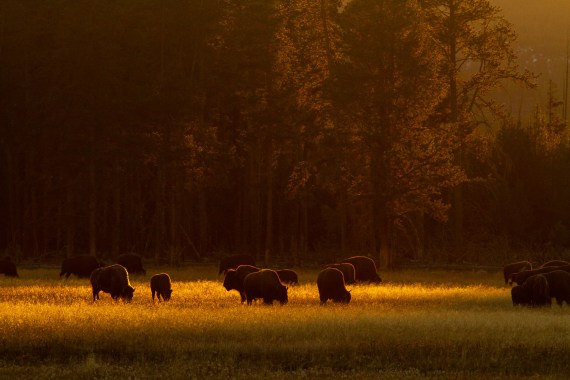
Bison herd in golden light along Fountain Flat Drive, Yellowstone National Park, Wyoming
[Canon 7D with Canon EF 70-200mm f4 L USM lens at 200mm; 1/500 second at f9; ISO 800; tripod]
Bison herd in golden light along Fountain Flat Drive, Yellowstone National Park, Wyoming
[Canon 7D with Canon EF 400mm f5.6 L USM lens; 1/500 second at f9; ISO 800; tripod]
Bison herd in golden light along Fountain Flat Drive, Yellowstone National Park, Wyoming
[Canon 7D with Canon EF 400mm f5.6 L USM lens; 1/500 second at f9; ISO 800; tripod]

As the sun set over Fountain Flat Drive it illuminated this herd of Bison with neat golden backlight/rimlight. I love the peaceful painterly quality of these photos. They look even better if you view them full-screen.

Lenticular clouds along Fountain Flat Drive, Yellowstone National Park, Wyoming
Bison herd and Cottonwoods (and Ryan) near Lamar Valley
[iPhone 7 Plus panorama]
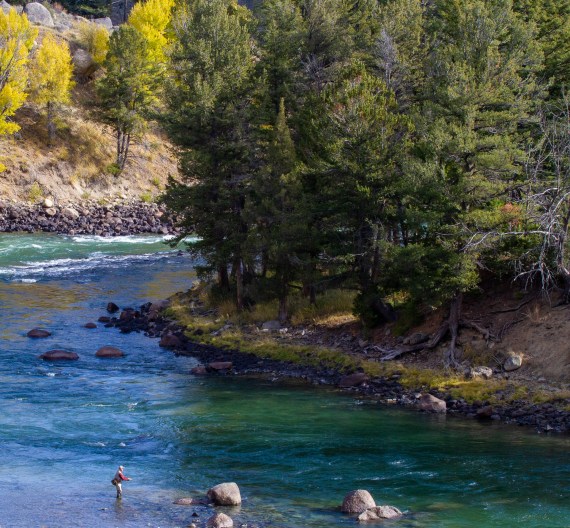
Fisherman and fall colors, Yellowstone National Park, Wyoming
Abstracts of water shimmers on Soda Butte Creek, Yellowstone National Park, Wyoming
Cottonwoods along Soda Butte Creek, Yellowstone National Park, Wyoming
Ryan photographing the “Zen Cottonwood” in Lamar Valley, Yellowstone National Park, Wyoming
The “Zen Cottonwood” along Soda Butte Creek, Yellowstone National Park, Wyoming

We named this well-balanced tree along Soda Butte Creek, the “Zen Cottonwood.” Ryan first spotted it and it is a stately tree.

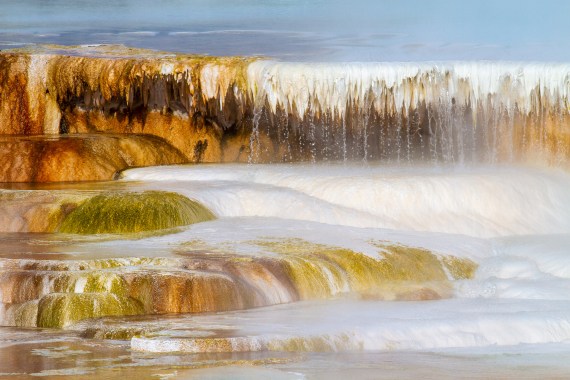
Mammoth Hot Springs Terraces, Yellowstone National Park, Wyoming

If you can’t find wildlife, you can always find scenery in Yellowstone National Park! Some details of the Mammoth Hot Springs Terraces.

[Canon 7D with Canon EF 70-200mm f4 L USM lens at 70mm; 1.6 seconds at f5.6; ISO 1600

We spent quite a while with this good looking bull Bison. My idea was to take a long exposure so the grass would blur but the Bison and background would be sharp. I took about 100 photos ranging from 1.6 seconds to 3.2 seconds and this is one of the few that turned out. BUT I don’t think my idea really came to fruition as there is not enough blur to the grass, and the sage doesn’t really blow in the wind. Oh well…You gotta try and experiment!

Sunset in the Hayden Valley, Yellowstone National Park, Wyoming

Coming soon….”Kicked out of Yellowstone”…due to snow, not our behavior!

A Grizzly Welcome -Yellowstone Day 1

***Just a note to my subscribers that I have now ponied up for the “Premium” plan so you won’t have to wade through those annoying ads placed into my posts.

October 6-7, 2019

Since we were coming from the South Dakota Badlands, Ryan Marshik and I headed towards the Yellowstone East Entrance. The country between Cody, Wyoming and the park is stellar, and as we got closer, we started thinking, “Hey, we might even have some shooting light by the time we get into Yellowstone!”

But even before we got to the park, we had our first bear sighting. It was a Grizzly crossing the Northfork Shoshone River. We managed a few snaps but it was soon into the brush…but on our side of the river. So we decided to pull over in a locked entrance to a campground. And we didn’t have to wait long! The Grizzly was working its way towards us…and completely ignoring the two Minnesota guys laying on the ground pointing big barrel-shaped things toward it. Within a minute the bear was too close for comfort and we retreated to the vehicle.

But then a large patch of Wild Rose hips caught her attention. And she began delicately plucking the ripe fruit only 20 yards from us. It was dusk and we kept cranking our ISO up. I ended up at my max for my old Canon 7D…ISO 6400. Some noise in the photos, but I’d MUCH rather have a sharp and grainy/noisy photos of a Grizzly than a blurry noise-free shot!

These images took quite a bit of working in Lightroom to get to the images below.

Grizzly Bear eating Wild Rose hips near Northfork Shoshone River, Wyoming
[Canon 7D with Canon EF 400mm f5.6L USM lens; 1/250 second at f5.6; ISO 6400; hand-held]
Grizzly Bear at dusk near Northfork Shoshone River
[Canon 7D with Canon EF 400mm f5.6L USM lens; 1/160 second at f5.6; ISO 5000; hand-held]
Grizzly Bear eating Wild Rose hips near Northfork Shoshone River, Wyoming
[Canon 7D with Canon EF 400mm f5.6L USM lens; 1/250 second at f5.6; ISO 6400; hand-held]
Grizzly Bear eat dusk near Northfork Shoshone River, Wyoming
Black and white image
Grizzly Bear eat dusk near Northfork Shoshone River, Wyoming
[Canon 7D with Canon EF-S 18-55mm f3.5-5.6 lens at 55mm; 1/160 second at f5.6; ISO 5000; hand-held]
Grizzly Bear eating Wild Rose hips near Northfork Shoshone River, Wyoming
[Canon 7D with Canon EF 400mm f5.6L USM lens; 1/200 second at f5.6; ISO 6400; hand-held]

Eventually she sauntered within 2 feet of our SUV. A really neat encounter. Made better by the fact that we didn’t have to share it with the typical Yellowstone “shooting gallery.”

Red-tailed Hawk silhouette in old burn; Yellowstone National Park, Wyoming
[Canon 7D with Canon EF 400mm f5.6L USM lens; 1/100 second at f5.6; ISO 400; hand-held]

Due to our wonderful “bear delay,” we didn’t get inside the park until sunset. But Ryan spotted this perched Red-tailed Hawk which made for a neat silhouette.

Burned pines and Yellowstone Lake sunset; Yellowstone National Park, Wyoming
Red-tailed Hawk silhouette in old burn; Yellowstone National Park, Wyoming
[Canon 7D with Canon EF 70-200mm f4L USM lens; 1/100 second at f5.6; ISO 800; hand-held]
Ryan shooting the sunset and burned pines scene

We camped in the Madison Campground, and headed out in the early morning, excited to see the Hayden Valley again. The last seven years had been spring trips, and almost every time the road through the valley had still not been opened up by the time we arrived.

And we found this cooperative Raven. In all likelihood, it is probably the same begging Common Raven that I photographed here years ago. It is such a treat to be able to get close to these birds since in Minnesota they are so spooky that you can’t even touch the brake pedal and they are gone.

Video of the Raven’s backlit breath while calling was my goal, but I also tried some stills. Like Ryan said, it would have been better if the slight breeze hadn’t been blowing their breath behind them. Interestingly, the biggest puff of breath didn’t come until their beak was already half closed again…and not when it was fully open.

Common Raven backlit breath, Hayden Valley, Yellowstone National Park, Wyoming
[Panasonic GH5 with Sigma 50-500mm lens and Metabones adapter to Canon mount; 1/320 second at unknown f-stop; ISO 200; hand-held]

I intentionally darkened this image, and increased contrast, in Lightroom to make it a more dramatic photo.

Common Raven backlit breath, Hayden Valley, Yellowstone National Park, Wyoming
[Panasonic GH5 with Sigma 50-500mm lens and Metabones adapter to Canon mount; 1/400 second at unknown f-stop; ISO 200; hand-held]
Common Raven backlit breath, Hayden Valley, Yellowstone National Park, Wyoming
Note nictating membrane over eye (in middle of “blinking”)
[Panasonic GH5 with Sigma 50-500mm lens and Metabones adapter to Canon mount; 1/400 second at unknown f-stop; ISO 200; hand-held]
Can you find the Grizzly?

We were photographing the Coyote below when Ryan spotted this distant Grizzly. We knew we were somewhere near a carcass by the small Raven congregation and 3 Coyotes milling around. We had walked out into this meadow near Canyon to check it out. We later learned that it was a carcass that had been picked over, and this Grizz was probably checking on it…Just in case.

Grizzly in morning light near Canyon; Yellowstone National Park, Wyoming
Note the distinctive shoulder hump of the Grizzly (Black Bears lack this). Its shape is highlighted by rim light of the rising sun.
[Canon 7D with Sigma 50-500mm lens at 500mm; 1/640 second at f6.3; ISO 500; tripod]
Coyote licking his chops near old carcass; Yellowstone National Park, Wyoming
[Canon 7D with Sigma 50-500mm lens at 500mm; 1/800 second at f6.3; ISO 100; -0.66ev; tripod]
Coyote leaping for voles in frosty meadow near Canyon; Yellowstone National Park, Wyoming
[Canon 7D with Canon EF 400mm f5.6 L USM lens; 1/1000 second at f5.6; ISO 100; -0.66ev; tripod]
Ryan shooting our Raven friend in Hayden Valley, Yellowstone National Park, Wyoming
Lunch on Yellowstone Lake (colder than it looks!), Yellowstone National Park, Wyoming
Sparky on Mount Washburn pass, Yellowstone National Park, Wyoming
Evening stars at our campsite in Madison Campground, Yellowstone National Park, Wyoming
[Sony A6500 with Rokinon 12mm lens; 20 seconds at f18; ISO 320; tripod (and flashlight to illuminate my face)

Day 2-3 in Yellowstone coming soon

Prairie Dog Group Back Rub and Peek-a-Boo Burrowing Owls in the South Dakota Badlands: October 5-6

South Dakota’s Badlands National Park

Ryan Marshik and I moved our annual Yellowstone trip to fall this year. We hadn’t “done fall” since 2012. Only late April-early May spring trips from 2013-18. And this time we were NOT going to go through the relative torture of driving 17 hours straight to Yellowstone. No siree. This time we decided to make our first stop South Dakota’s Badlands National Park.

We had high expectations for beautiful landscapes and Bighorn rams, and a slight hope for a Burrowing Owl. Ryan had a report from a friend of a location from this summer where a Burrowing Owl had set up camp in a Prairie Dog town.

GROUP BACK RUB! Black-tailed Prairie Dogs
[Badlands National Park, South Dakota]
(Canon 7D with Canon EF 400mm f5.6 L USM lens; f5.6 at 1/640 second; ISO 100; -0.33 ev; tripod)

Well, we found the Prairie Dogs! Ryan doesn’t care for these rodents at all. But this is where the Burrowing Owl had been reported, so he tolerated them.

I love these “Group Backrub” photos. This is a family group of young ones and an adult.

GROUP BACK RUB! Black-tailed Prairie Dogs
[Badlands National Park, South Dakota]
(Canon 7D with Canon EF 400mm f5.6 L USM lens; f5.6 at 1/640 second; ISO 100; -0.33 ev; tripod)
Bighorn ewe
[Badlands National Park, South Dakota]
(Canon 7D with Canon EF 70-200mm f4 L USM lens at 70mm; 1/200 second at f10; ISO 3200; -hand-held)
Bison and Badlands
[Badlands National Park, South Dakota]
(Canon 7D with Canon EF 70-200mm f4 L USM lens at 135mm; 1/100 second at f8; ISO 3200; hand-held)
Bison scratching his belly on wood post (processed as black and white in Lightroom)
[Badlands National Park, South Dakota]
(Sony A6500 with Rokinon 12mm f2 lens; 1/60 second at unknown f-stop; ISO 800; hand-held)
Bison sunset
[Badlands National Park, South Dakota]
Badlands sunset
[Badlands National Park, South Dakota]
(Sony A6500 with Rokinon 12mm f2 lens; 1/60 second at unknown f-stop; ISO 640; hand-held)
Burrowing Owl at sunrise
[Badlands National Park, South Dakota]
(Canon 7D with Canon EF 400mm f5.6 L USM lens; 1/500 second at f5.6; ISO 200; -0.33 ev; hand-held)

Ryan’s “owl intel” paid off! The next morning we drove by the spot where his friend Sandra had seen one in the summer. I saw a very round blob and yelled, “Stop!” Sure enough, a Burrowing Owl was soaking up the first rays of sun on a cool morning. But as we stopped the car and fired off a few shots, it retreated to the safety of its abandoned Prairie Dog hole.

A few minutes later, we found a second Burrowing Owl about 100 yards away. This one was in perfect light, but crouched down when we stopped the car, and hid in the burrow when we got out.

We set up our tripods across the road from the owl and laid down to shoot at eye level. But this guy wasn’t having it. He’d only peek above the rim of his safe hidey-hole, and even after an hour and a half didn’t show any more of himself than the top of his head and two eyes. But a very neat experience none the less.

Burrowing Owl at sunrise
[Badlands National Park, South Dakota]
(Canon 7D with Canon EF 400mm f5.6 L USM lens with Canon 2x-extender; 1/800 second at f11; ISO 400; -0.33 ev; tripod)
Burrowing Owl at sunrise
[Badlands National Park, South Dakota]
(Canon 7D with Canon EF 400mm f5.6 L USM lens; f11 at 1/1250 second; ISO 100; -0.33 ev; tripod)
Burrowing Owl at sunrise
[Badlands National Park, South Dakota]
(Canon 7D with Canon EF 400mm f5.6 L USM lens; 1/500 second at f5.6; ISO 200; -0.33 ev; hand-held)
Burrowing Owl at sunrise
[Badlands National Park, South Dakota]
(Canon 7D with Canon EF 400mm f5.6 L USM lens; 1/800 second at f5.6; ISO 100; -0.33 ev; tripod)
Black-tailed Prairie Dog family
[Badlands National Park, South Dakota]
Horned Lark
[Badlands National Park, South Dakota]
(Canon 7D with Canon EF 400mm f5.6 L USM lens with Canon 2x-extender; 1/640 second at f11; ISO 400; -0.33 ev; tripod)

The 3 photos above are results of me playing around with Lightroom controls and experiencing a “haccident”… a happy accident. By sliding the Luminance slider to 100 and the Detail slider to 0 under the Noise Reduction panel, you reduce the detail in the image and it creates a painterly quality to the photo. No Photoshop filters here!

Lizards, Tortoises & Snakes—Southeast Arizona June 2019 Part 7

Here are the seven species of herps I saw in southeast Arizona. Most were lifers for me. I get about as excited about new species of reptiles and amphibians as I do about new birds!

Ornate Tree Lizard (Urosaurus ornatus)
[Beatty’s Miller Canyon Apiary and Orchard near Sierra Vista, Arizona]

Ornate Tree Lizard (Urosaurus ornatus)
[Beatty’s Miller Canyon Apiary and Orchard near Sierra Vista, Arizona]

Ornate Tree Lizard (Urosaurus ornatus)
[Beatty’s Miller Canyon Apiary and Orchard near Sierra Vista, Arizona]

Ornate Tree Lizard (Urosaurus ornatus)
[Beatty’s Miller Canyon Apiary and Orchard near Sierra Vista, Arizona]

Clark’s Spiny Lizard (Sceloporus clarkii)
[Sonoran Desert Museum near Tucson, Arizona]

Note the blue-tinted body and black bars on forelegs that help identify this Clark’s Spiny Lizard (Sceloporus clarkii) and separate it from the Desert Spiny Lizard below.
[Sonoran Desert Museum near Tucson, Arizona]

Desert Spiny Lizard (Sceloporus magister)
[Sonoran Desert Museum near Tucson, Arizona]

This male Desert Spiny Lizard (Sceloporus magister) was very cooperative. He was displaying (and even doing a little “dance”). Maybe it was all for the benefit of the less-colorful female (pictured below).
[Sonoran Desert Museum near Tucson, Arizona]

Desert Spiny Lizard (Sceloporus magister)
[Sonoran Desert Museum near Tucson, Arizona]

Male Desert Spiny Lizard (Sceloporus magister)
[Sonoran Desert Museum near Tucson, Arizona]

Desert Spiny Lizard (Sceloporus magister)
[Sonoran Desert Museum near Tucson, Arizona]

Male Desert Spiny Lizard (Sceloporus magister)
[Sonoran Desert Museum near Tucson, Arizona]

Desert Spiny Lizard (Sceloporus magister)
[Sonoran Desert Museum near Tucson, Arizona]

Male Desert Spiny Lizard (Sceloporus magister)
[Sonoran Desert Museum near Tucson, Arizona]

Desert Spiny Lizard (Sceloporus magister)
[Sonoran Desert Museum near Tucson, Arizona]

Female (?) Desert Spiny Lizard (Sceloporus magister)
[Sonoran Desert Museum near Tucson, Arizona]

Desert Spiny Lizard (Sceloporus magister)
[Sonoran Desert Museum near Tucson, Arizona]

Male Desert Spiny Lizard (Sceloporus magister)
[Sonoran Desert Museum near Tucson, Arizona]

Desert Spiny Lizard (Sceloporus magister)
[Sonoran Desert Museum near Tucson, Arizona]

Female Desert Spiny Lizard (Sceloporus magister)
[Sonoran Desert Museum near Tucson, Arizona]

Desert Spiny Lizard (Sceloporus magister)
[Sonoran Desert Museum near Tucson, Arizona]

Female Desert Spiny Lizard (Sceloporus magister)
[Sonoran Desert Museum near Tucson, Arizona]

Clark’s Spiny Lizard (Sceloporus clarkii) female or juvenile?
[Sonoran Desert Museum near Tucson, Arizona]

Clark’s Spiny Lizard (Sceloporus clarkii) female or juvenile?
[Sonoran Desert Museum near Tucson, Arizona]

Sonoran Spotted Whiptail (Aspidoscelis sonorae)
[Beatty’s Miller Canyon Apiary and Orchard near Sierra Vista, Arizona]

Sonoran Spotted Whiptail (Aspidoscelis sonorae)
[Beatty’s Miller Canyon Apiary and Orchard near Sierra Vista, Arizona]

Sonoran Spotted Whiptail (Aspidoscelis sonorae)
[Beatty’s Miller Canyon Apiary and Orchard near Sierra Vista, Arizona]

Sonoran Spotted Whiptail (Aspidoscelis sonorae)
[Beatty’s Miller Canyon Apiary and Orchard near Sierra Vista, Arizona]
Round-tailed Horned Lizard (Phrynosoma modestum)
[Foothills Road Chihuahuan Desert Chiricahua Mountains near Portal, Arizona]

I was thrilled to find this Round-tailed Horned Lizard (Phrynosoma modestum) on Foothills Road after dark near Portal, Arizona. I joined him on the road and got some decent photos considering it was quite dark out. I had to move slow or he would bolt. This was my third species of horned lizard for my life list.
[Foothills Road Chihuahuan Desert Chiricahua Mountains near Portal, Arizona]

Round-tailed Horned Lizard (Phrynosoma modestum)
[Foothills Road Chihuahuan Desert Chiricahua Mountains near Portal, Arizona]

Round-tailed Horned Lizard (Phrynosoma modestum)
[Foothills Road Chihuahuan Desert Chiricahua Mountains near Portal, Arizona]

Round-tailed Horned Lizard (Phrynosoma modestum)
[Foothills Road Chihuahuan Desert Chiricahua Mountains near Portal, Arizona]

What great camouflage!

Round-tailed Horned Lizard (Phrynosoma modestum)
[Foothills Road Chihuahuan Desert Chiricahua Mountains near Portal, Arizona]

Round-tailed Horned Lizard (Phrynosoma modestum)
[Foothills Road Chihuahuan Desert Chiricahua Mountains near Portal, Arizona]

Round-tailed Horned Lizard (Phrynosoma modestum)
[Foothills Road Chihuahuan Desert Chiricahua Mountains near Portal, Arizona]

Sonoran Desert Tortoise (Gopherus morafkai)
[Along road west of Patagonia-Sonoita Creek Preserve near Patagonia, Arizona]

This old guy was sauntering along a dirt road near Patagonia, Arizona…and I couldn’t resist making friends with him. What a magnificent creature!

Sonoran Desert Tortoise (Gopherus morafkai)
[Along road west of Patagonia-Sonoita Creek Preserve near Patagonia, Arizona]

Sonoran Desert Tortoise (Gopherus morafkai)
[Along road west of Patagonia-Sonoita Creek Preserve near Patagonia, Arizona]

Selfie with Sonoran Desert Tortoise (Gopherus morafkai)
[Along road west of Patagonia-Sonoita Creek Preserve near Patagonia, Arizona]

Sonoran Desert Tortoise (Gopherus morafkai)
[Along road west of Patagonia-Sonoita Creek Preserve near Patagonia, Arizona]

Eye-level view of Sonoran Desert Tortoise (Gopherus morafkai). Sometimes you just have to lay in the dirt to get the shot!
[Along road west of Patagonia-Sonoita Creek Preserve near Patagonia, Arizona]

Sonoran Desert Tortoise (Gopherus morafkai)
[Along road west of Patagonia-Sonoita Creek Preserve near Patagonia, Arizona]
Sonoran Desert Tortoise (Gopherus morafkai)
[Along road west of Patagonia-Sonoita Creek Preserve near Patagonia, Arizona]
Sonoran Desert Tortoise (Gopherus morafkai)
[Along road west of Patagonia-Sonoita Creek Preserve near Patagonia, Arizona]
Sonoran Desert Tortoise (Gopherus morafkai)
[Along road west of Patagonia-Sonoita Creek Preserve near Patagonia, Arizona]

See ya buddy! Live long and prosper.

Sonoran Desert Tortoise (Gopherus morafkai)
[Along road west of Patagonia-Sonoita Creek Preserve near Patagonia, Arizona]

Sonoran Whipsnake (Masticophis bilineatus)
[Hunter Canyon near Sierra Vista, Arizona]

I saw this very long and thin snake curled up on a dirt road in the mountains near Sierra Vista, Arizona on my way to Hunter Canyon. But by the time I got the car stopped, it was already up a nearby tree. I was really hoping to get a very up close look at this guy, especially since it was a lifer.

I determined that it is a Sonoran Whipsnake (Masticophis bilineatus)
[Hunter Canyon near Sierra Vista, Arizona]

Swedes Forest: Lizards & Cactus—Minnesota River Valley July 2019

July 23, 2019

Did you know that within the border of Minnesota lives 3 lizard species and 4 species of cactus? On this quick trip down to the western portion of the Minnesota River valley I hoped to see several of these rare species.

Panorama of Swedes Forest in Yellow Medicine County, Minnesota

My first stop was Swedes Forest Scientific and Natural Area (SNA). This site was protected because of its unique rock outcrops, which were historically in a prairie setting. But over the years, Bur Oaks and other trees have grown up and shaded the rocks. The periodic fires of pre-White-Settlement times kept the landscape as mainly prairie, but with the fire suppression of the last 100 years, the forest has encroached. It is time to try and bring back the open grasslands here. On the day I arrived there was a crew cutting down these trees in order to restore the ecosystem.

A view from the exposed bedrock of Swedes Forest SNA.

I headed right to the most obvious rock outcrop south of the parking area. My main goal was to see the very rare Five-lined Skink, but I also knew there were Prairie Skinks here as well. After about 15 minutes I saw a couple-inch long skink start scurrying across the reddish rock. It stopped barely long enough for me to get a few shots. The first thing I noticed was its blue tail…but that doesn’t help identifying the critter since both the Prairie Skink and Five-lined Skink juveniles show this tail color. But by the head and back stripes and markings I could tell it was a young Prairie Skink. Still very exciting because I have never seen one before.

Juvenile Prairie Skink (Plestiodon septentrionalis)

My only skink for the day (despite looking under many rocks) was this juvenile Prairie Skink (Plestiodon septentrionalis). It’s blue tail is one clue but you really have to check out its back and head stripes to separate it from the similar, but much rarer, Five-lined Skink. This youngster was only a few inches long.

I nicknamed this jumping spider the “scary Halloween mask spider” for its unique abdomen pattern, and texted a photo to my kids. I thought I had a rare species at first, but later learned from Minnesota spider expert Chad Heins, that this was simply a young female Habronattus decorus, a jumping spider which I have photographed the very different looking male several times.

Have you ever seen a shiny green, red and blue beetle before? I hadn’t either…until I found this one foraging on a shrub. This is Calleida punctata, a species of ground beetle.

The Coral Hairstreak is a beautiful butterfly of mid summer. I rarely get to see them as they are never found in large numbers.

Talinum parviflorum (Small-flowered Fameflower or Rock Pink)

Shallow depressions in bedrock outcrops on the prairie create one of Minnesota’s rarest habitats. These low spots catch and hold rainwater since they have no outlet. One specialist in this microhabitat is Talinum parviflorum (Small-flowered Fameflower or Rock Pink) as show in the 2 photos above. I was a bit late to see it in full bloom unfortunately, so I guess I’ll have to come back!

Brittle Prickly Pear Cactus (Opuntia fragilis)

Some may be surprised to learn that cactus grows natively in Minnesota. The above four photos are of one of the smaller species called Brittle Prickly Pear (Opuntia fragilis). It is fragile as its Latin name implies, but it packs a painful prickly punch if you accidentally touch or kneel on one!

The tiny, but large for its family, Galgupha Ebony Bug is so shiny that you can see my reflection, and that of the sun, clouds and blue sky, on its smooth exoskeleton.

Plains Clubtail dragonfly (Gomphus externus)

Dickcissels are only irregular visitors to my home territory of northern Minnesota, making summer irruptions every 4 years or so. But they are abundant breeders in the scrubby grasslands of Southern Minnesota.

**All photos taken with Canon 7D and either Canon 70-200mm f4 lens or Canon 400mm f5.6 lens. Macro photos with Canon 500D attached to Canon 70-200mm lens. Panorama photos taken with iPhone 7+.

Trio of Romping Red Fox Pups—Video & Photos

TRIO of ROMPING RED FOX PUPS. Carlton County, Minnesota. June 23, 2019.

I had a date with a kayak and a family of Common Loons on a lake near my home in northeastern Minnesota…but then I found these siblings out and about in the middle of the afternoon. The Loons would have to wait!

I pulled over and enjoyed their antics for about an hour. I shot video and photos out of the van window and they only occasionally looked over at me. In the entire hour I was there, only one other car came by, and even then, the pups came right back out onto the gravel road to continue their wrestling.

There is an old gravel pit that is now overgrown. Their den was probably in that area.
Play fighting pups

Video—Dancing Chickens: Shooting with Sparky

A morning on the Greater Prairie-Chicken lek at Tympanuchus WMA in Northwest Minnesota; April 26, 2019

Chicken of the Prairie: A Morning in a Greater Prairie-Chicken Blind—Part 1

Greater Prairie-Chicken Tympanuchus WMA Glacial Ridge NWR Polk County MN IMG_4767

Greater Prairie-Chicken battling at Tympanuchus WMA near Glacial Ridge NWR; Polk County, Minnesota; April 26, 2019

[Canon 7D with Canon EF 400mm L USM f5.6 lens; 1/800 at f5.6; ISO 2000; handheld]

April 26, 2019

Photographers and Birders never really get to enjoy the benefits of staying in a hotel. And this was true for me on Friday morning. I rolled in to Crookston, Minnesota late (after a 4 1/2 hour drive) and after packing my photo/video/sound gear it was already 11pm. Not much time to sleep before the alarm went off at 3:30am. No complimentary breakfast for spring/summer birders! Two granola bars would have to suffice. I had to be in the blind by 4:50am.

Even at that dark hour, the birds had beat me to the lek. Reflectors had marked the 300 yard path to the Greater Prairie-Chicken blind at Tympanuchus Wildlife Management Area in Polk County, Minnesota (in the northwestern part of the state). Honestly it was one of the nicest grouse blinds I’ve ever been in. Spacious and roomy with semi-comfy stools, and even a plywood floor! But like all blinds constructed for the public and not specifically for photographers, it lacked a low-angle shooting window. Photographers like to get eye-level shots. It makes the images more intimate and helps isolate the subject from its background. The addition of two “shooting windows” about a foot off the floor/ground would be really nice.

But as spectacular as their displays are, the sounds these guys make are simply mesmerizing. Crazy cackles, hoots, booms against a background of overhead winnowing of snipe and singing Savannah Sparrows, Grasshopper Sparrows and Western Meadowlarks. I even heard a couple Greater Yellowlegs and a Marbled Godwit. A true spring chorus!

I am far more familiar with Sharp-tailed Grouse displays, and in comparison, the Prairie-Chickens dance less and fight more. Sharptails perform fancy footwork dance displays and inflate purple throat sacs. Greater Prairie-Chickens do less dancing and seem to rely more on their impressive yellow-pink throat sacs and erected feather tufts. They also seem to face off with other males frequently.

By 9am, the energy level had dissipated and the birds melted into the brushy landscape.

**I WILL POST A VIDEO, INCLUDING SOUNDS AND SLOW MOTION, OF THE PRAIRIE CHICKEN DISPLAYS SOON. STAY TUNED!

Greater Prairie-Chicken Tympanuchus WMA Glacial Ridge NWR Polk County MN IMG_5098

Greater Prairie-Chicken male displaying at Tympanuchus WMA near Glacial Ridge NWR; Polk County, Minnesota; April 26, 2019

The male’s display is

[Canon 7D with Canon EF 400mm L USM f5.6 lens; 1/1600 at f5.6; ISO 500; handheld]

Greater Prairie-Chicken Tympanuchus WMA Glacial Ridge NWR Polk County MN IMG_5166

Greater Prairie-Chicken males displaying at Tympanuchus WMA near Glacial Ridge NWR; Polk County, Minnesota; April 26, 2019

At the peak of displaying, I counted about 15 Greater Prairie-Chickens…Maybe 12 males and 3 females. In this photo you can see 4 males displaying.

[Canon 7D with Sigma 50-500mm lens at 167mm; 1/1600 at f5.6; ISO 320; handheld]

Greater Prairie-Chicken Tympanuchus WMA Glacial Ridge NWR Polk County MN IMG_5113

Though there were no low angle shooting windows in the blind, I did manage to lay on my belly and shoot a couple shots under the canvas blind’s zippered door. I like the out of focus red dogwoods/willows.

[Canon 7D with Canon EF 400mm L USM f5.6 lens; 1/1600 at f6.3; ISO 640; handheld]

Greater Prairie-Chicken Tympanuchus WMA Glacial Ridge NWR Polk County MN IMG_5123

Greater Prairie-Chicken male at Tympanuchus WMA near Glacial Ridge NWR; Polk County, Minnesota; April 26, 2019

[Canon 7D with Canon EF 400mm L USM f5.6 lens; 1/1600 at f5.6; ISO 500; handheld]

Greater Prairie-Chicken Tympanuchus WMA Glacial Ridge NWR Polk County MN IMG_4941

Greater Prairie-Chicken males at Tympanuchus WMA near Glacial Ridge NWR; Polk County, Minnesota; April 26, 2019

[Canon 7D with Canon EF 400mm L USM f5.6 lens; 1/800 at f6.3; ISO 640; handheld]

Greater Prairie-Chicken Tympanuchus WMA Glacial Ridge NWR Polk County MN IMG_4601

Greater Prairie-Chicken male displaying at Tympanuchus WMA near Glacial Ridge NWR; Polk County, Minnesota; April 26, 2019

[Canon 7D with Canon EF 400mm L USM f5.6 lens; 1/500 at f5.6; ISO 2000; handheld]

Greater Prairie-Chicken Tympanuchus WMA Glacial Ridge NWR Polk County MN IMG_4918

Greater Prairie-Chicken male displaying at Tympanuchus WMA near Glacial Ridge NWR; Polk County, Minnesota; April 26, 2019]

Prairie-Chickens are a bird of open prairie and brushy grasslands. This part of Minnesota has thousands of acres of such habitat preserved in many Nature Conservency sites, DNR Wildlife Management Areas and the massive Glacial Ridge National Wildlife Refuge (along the old beach line of Glacial Lake Agassiz).

[Canon 7D with Canon EF 70-200mm L USM f4 lens; 1/800 at f4; ISO 250; handheld]

Greater Prairie-Chicken Tympanuchus WMA Glacial Ridge NWR Polk County MN IMG_4836

Greater Prairie-Chicken male displaying at Tympanuchus WMA near Glacial Ridge NWR; Polk County, Minnesota; April 26, 2019]

The sun came up at 6:18am and the photography really kicked into high gear. I took over 1200 photos but “chimped and trashed” 700 of those, keeping about 500.

[Canon 7D with Canon EF 400mm L USM f5.6 lens; 1/1600 at f6.3; ISO 800; handheld]

Greater Prairie-Chicken Tympanuchus WMA Glacial Ridge NWR Polk County MN IMG_4887

Greater Prairie-Chicken male displaying at Tympanuchus WMA near Glacial Ridge NWR; Polk County, Minnesota; April 26, 2019]

Love the head-on view!

[Canon 7D with Canon EF 400mm L USM f5.6 lens; 1/800 at f6.3; ISO 1000; handheld]

Greater Prairie-Chicken Tympanuchus WMA Glacial Ridge NWR Polk County MN IMG_4769

Greater Prairie-Chicken: two males facing off and battling at Tympanuchus WMA near Glacial Ridge NWR; Polk County, Minnesota; April 26, 2019

Brief aerial “battles” were fairly common during my 4 hours in the blind. Most often they would face-off and then one would back off and wander away. But occasionally fights would erupt.

[Canon 7D with Canon EF 400mm L USM f5.6 lens; 1/800 at f5.6; ISO 2000; handheld]

Greater Prairie-Chicken Tympanuchus WMA Glacial Ridge NWR Polk County MN IMG_4768

Greater Prairie-Chicken: two males facing off and battling at Tympanuchus WMA near Glacial Ridge NWR; Polk County, Minnesota; April 26, 2019

[Canon 7D with Canon EF 400mm L USM f5.6 lens; 1/800 at f5.6; ISO 2000; handheld]

Greater Prairie-Chicken Tympanuchus WMA Glacial Ridge NWR Polk County MN IMG_5011

Greater Prairie-Chicken male displaying at Tympanuchus WMA near Glacial Ridge NWR; Polk County, Minnesota; April 26, 2019]

[Canon 7D with Canon EF 400mm L USM f5.6 lens; 1/1600 at f5.6; ISO 1250; handheld]

Greater Prairie-Chicken Tympanuchus WMA Glacial Ridge NWR Polk County MN IMG_4979

Greater Prairie-Chicken male displaying n a shrub! at Tympanuchus WMA near Glacial Ridge NWR; Polk County, Minnesota; April 26, 2019]

Now here’s something you don’t see every day…A displaying Prairie-Chicken in a shrub!

[Canon 7D with Canon EF 400mm L USM f5.6 lens; 1/800 at f6.3; ISO 500; handheld]

Greater Prairie-Chicken Tympanuchus WMA Glacial Ridge NWR Polk County MN IMG_5033

Greater Prairie-Chicken: two males facing off and battling at Tympanuchus WMA near Glacial Ridge NWR; Polk County, Minnesota; April 26, 2019

[Canon 7D with Canon EF 400mm L USM f5.6 lens; 1/1600 at f5.6; ISO 640; handheld]

Greater Prairie-Chicken Tympanuchus WMA Glacial Ridge NWR Polk County MN IMG_5017

Greater Prairie-Chicken male displaying at Tympanuchus WMA near Glacial Ridge NWR; Polk County, Minnesota; April 26, 2019]

[Canon 7D with Canon EF 400mm L USM f5.6 lens; 1/1600 at f6.3; ISO 800; handheld]

Greater Prairie-Chicken Tympanuchus WMA Glacial Ridge NWR Polk County MN IMG_5040

Greater Prairie-Chicken: two males facing off and battling at Tympanuchus WMA near Glacial Ridge NWR; Polk County, Minnesota; April 26, 2019

[Canon 7D with Canon EF 400mm L USM f5.6 lens; 1/1600 at f5.6; ISO 640; handheld]

Greater Prairie-Chicken Tympanuchus WMA Glacial Ridge NWR Polk County MN IMG_4730

Greater Prairie-Chicken male displaying at Tympanuchus WMA near Glacial Ridge NWR; Polk County, Minnesota; April 26, 2019]

[Canon 7D with Canon EF 400mm L USM f5.6 lens; 1/800 at f5.6; ISO 1000; handheld]

Greater Prairie-Chicken Tympanuchus WMA Glacial Ridge NWR Polk County MN IMG_4759

Greater Prairie-Chicken male displaying for female at Tympanuchus WMA near Glacial Ridge NWR; Polk County, Minnesota; April 26, 2019]

[Canon 7D with Canon EF 400mm L USM f5.6 lens; 1/800 at f5.6; ISO 1000; handheld]

Greater Prairie-Chicken Tympanuchus WMA Glacial Ridge NWR Polk County MN IMG_4674

Greater Prairie-Chicken: two males facing off and battling at Tympanuchus WMA near Glacial Ridge NWR; Polk County, Minnesota; April 26, 2019

[Canon 7D with Canon EF 400mm L USM f5.6 lens; 1/800 at f6.3; ISO 1250; handheld]

Greater Prairie-Chicken Tympanuchus WMA Glacial Ridge NWR Polk County MN IMG_4634

Greater Prairie-Chicken: two males facing off and battling at Tympanuchus WMA near Glacial Ridge NWR; Polk County, Minnesota; April 26, 2019

[Canon 7D with Canon EF 400mm L USM f5.6 lens; 1/800 at f5.6; ISO 2000; handheld]

Greater Prairie-Chicken Tympanuchus WMA Glacial Ridge NWR Polk County MN IMG_4566

Greater Prairie-Chicken male in shrub at Tympanuchus WMA near Glacial Ridge NWR; Polk County, Minnesota; April 26, 2019]

[Canon 7D with Canon EF 70-200mm L USM f4 lens at 200mm; 1/800 at f4; ISO 2500; handheld]

Greater Prairie-Chicken Tympanuchus WMA Glacial Ridge NWR Polk County MN IMG_4558

Greater Prairie-Chicken: two males facing off and battling at Tympanuchus WMA near Glacial Ridge NWR; Polk County, Minnesota; April 26, 2019

[Canon 7D with Canon EF 70-200mm L USM f4 lens at 176mm; 1/800 at f4; ISO 2000; handheld]

Greater Prairie-Chicken Tympanuchus WMA Glacial Ridge NWR Polk County MN

Greater Prairie-Chicken males displaying at Tympanuchus WMA near Glacial Ridge NWR; Polk County, Minnesota; April 26, 2019]

Three males displaying just before the sun came up at 6:18am. They had been on the lek since before 5am and would continue until 9am. It takes a lot of energy to impress the ladies!

[Canon 7D with Canon EF 70-200mm L USM f4 lens at 70mm; 1/250 at f4; ISO 400; handheld]

Greater Prairie-Chicken Tympanuchus WMA Glacial Ridge NWR Polk County MN IMG_4859

Greater Prairie-Chicken female at Tympanuchus WMA near Glacial Ridge NWR; Polk County, Minnesota; April 26, 2019]

The females were more in evidence than at a Sharp-tailed Grouse lek (in my experience). But I saw no mating taking place. She lacks the male’s fancy throat sacs and feather plumes.

[Canon 7D with Canon EF 400mm L USM f5.6 lens; 1/800 at f6.3; ISO 800; handheld]

Greater Prairie-Chicken Tympanuchus WMA Glacial Ridge NWR Polk County MN IMG_4878

Greater Prairie-Chicken male displaying at Tympanuchus WMA near Glacial Ridge NWR; Polk County, Minnesota; April 26, 2019]

[Canon 7D with Canon EF 400mm L USM f5.6 lens; 1/800 at f5.6; ISO 800; handheld]

Greater Prairie-Chicken Tympanuchus WMA Glacial Ridge NWR Polk County MN IMG_4430

Greater Prairie-Chicken male displaying at Tympanuchus WMA near Glacial Ridge NWR; Polk County, Minnesota; April 26, 2019

Not much to do photographically in the pre-dawn hour…Too dark. But what is fun is to slow your shutter speed way down and crank up the ISO and try some panning motion blurs. I got about 4 good photos that I’ve included here.

[Canon 7D with Canon EF 70-200mm L USM f4 lens at 200mm; 1/8 second at f4; ISO 3200; handheld]

Greater Prairie-Chicken Tympanuchus WMA Glacial Ridge NWR Polk County MN IMG_4384

Greater Prairie-Chicken male displaying at Tympanuchus WMA near Glacial Ridge NWR; Polk County, Minnesota; April 26, 2019

Love this motion blur at a very slow 1/3 of a second. I left the blue pre-twilight background but increased the white balance in the bird to a warmer hue. I do wish it was framed on the left instead of running out of the frame, but I can live with that.

[Canon 7D with Canon EF 70-200mm L USM f4 lens at 200mm; 1/3 second at f4; ISO 3200; handheld]

Greater Prairie-Chicken Tympanuchus WMA Glacial Ridge NWR Polk County MN IMG_4467

Greater Prairie-Chicken male displaying at Tympanuchus WMA near Glacial Ridge NWR; Polk County, Minnesota; April 26, 2019

[Canon 7D with Canon EF 70-200mm L USM f4 lens at 200mm; 1/15 second at f4; ISO 1600; handheld]

Greater Prairie-Chicken Tympanuchus WMA Glacial Ridge NWR Polk County MN IMG_4433

Greater Prairie-Chicken male displaying at Tympanuchus WMA near Glacial Ridge NWR; Polk County, Minnesota; April 26, 2019

You can shoot before dawn! I love the artistic/painterly quality of these early morning motion blurs.

[Canon 7D with Canon EF 70-200mm L USM f4 lens at 200mm; 1/8 second at f4; ISO 3200; handheld]

Greater Prairie-Chicken Tympanuchus WMA Glacial Ridge NWR Polk County MN IMG_5284

Greater Prairie-Chicken male displaying at Tympanuchus WMA near Glacial Ridge NWR; Polk County, Minnesota; April 26, 2019

[Canon 7D with Canon EF 400mm L USM f5.6 lens; 1/40 at f9; ISO 100; handheld]

Greater Prairie-Chicken Tympanuchus WMA Glacial Ridge NWR Polk County MN IMG_5367

Greater Prairie-Chicken: two males facing off at Tympanuchus WMA near Glacial Ridge NWR; Polk County, Minnesota; April 26, 2019

[Canon 7D with Canon EF 400mm L USM f5.6 lens; 1/1250 at f5.6; ISO 250; handheld]

Greater Prairie-Chicken Tympanuchus WMA Glacial Ridge NWR Polk County MN IMG_5238

Greater Prairie-Chicken male displaying at Tympanuchus WMA near Glacial Ridge NWR; Polk County, Minnesota; April 26, 2019

Another front view of this amazing bird of the prairies.

[Canon 7D with Canon EF 400mm L USM f5.6 lens; 1/1600 at f5.6; ISO 320; handheld]

Greater Prairie-Chicken Tympanuchus WMA Glacial Ridge NWR Polk County MN IMG_5181

Greater Prairie-Chicken male displaying at Tympanuchus WMA near Glacial Ridge NWR; Polk County, Minnesota; April 26, 2019

This young male (in front) was constantly trying to display in the center of the lek. But the older males (?) would immediately attack him and drive him from the center fo the lek to the fringes. They would even bite his back. I am assuming that he is just a younger individual and has not yet earned his rightful place.

[Canon 7D with Canon EF 400mm L USM f5.6 lens; 1/1250 at f6.3; ISO 320; handheld]

Greater Prairie-Chicken Tympanuchus WMA Glacial Ridge NWR Polk County MN IMG_4826

Greater Prairie-Chicken male displaying at Tympanuchus WMA near Glacial Ridge NWR; Polk County, Minnesota; April 26, 2019

[Canon 7D with Canon EF 400mm L USM f5.6 lens; 1/800 at f5.6; ISO 800; handheld]